
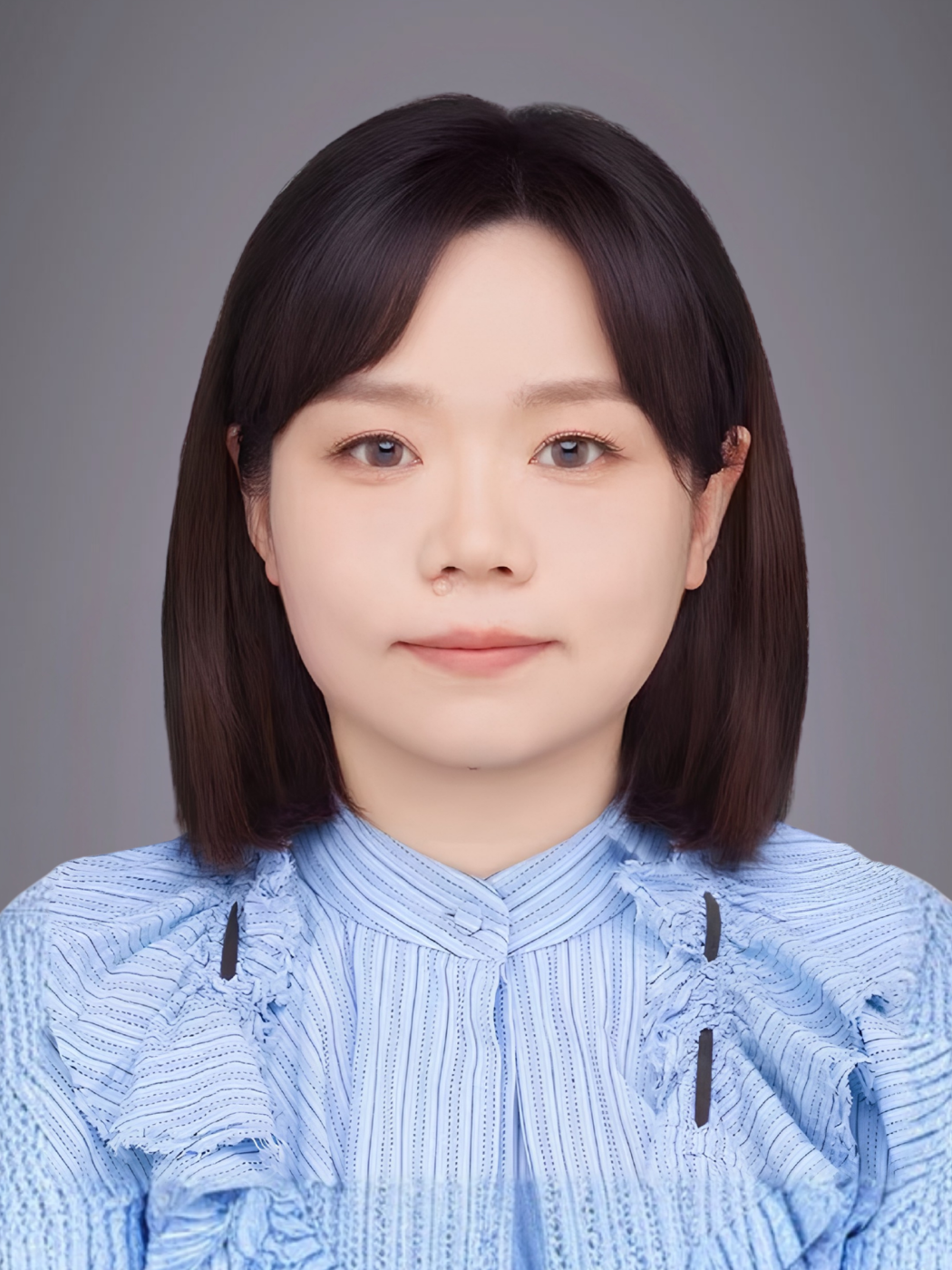
Wen Hu
- 职称:
Principal Investigator
- 联系方式:
wen.hu2@siat.ac.cn
- 个人网页:
- 座右铭:
个人简介
Dr. Wen Hu received her B.S. degree in Biomedical Engineering from Huazhong University of Science and Technology in 2007. She obtained her M.S. degree in Bioinformatics from Harbin Medical University in 2010 and Ph.D. degree in Biology at Tsinghua University and National Institute of Biological Sciences, Beijing in 2016. She conducted postdoctoral research at National Institute of Biological Sciences from 2016 to 2017, followed by serving as a Postdoctoral Associate at the Max Planck Institute for Biology from 2018 to 2020. Then she continued her postdoctoral training at the Brain and Mind Research Institute, Weill Cornell Medicine from 2020 to 2025 and held the position of Instructor in Neuroscience from 2025 to 2026.
Dr. Hu has been focusing on the development of multimodal single-cell long-read sequencing technologies and analytical frameworks to investigate cell-type specific RNA isoform usage in the mammalian brain. Her work has been published in prestigious journals including Nature Biotechnology (2022, 2025), Nature Communications (2025), Cell reports (2025) as the first or co-first author. She has received the funding support from the NSFC Excellent Young Scientists Fund Program (Overseas) and joined Shenzhen Institutes of Advanced Technology, Chinese Academy of Sciences as a Principal Investigator in 2026.
研究领域
Her research focuses on elucidating transcriptomic complexity shaped by alternative splicing in a cell-type specific context at single cell, spatial and subcellular resolution, and to leverage these insights to better understand mechanisms underlying brain development and neurological disorders.
代表论著
1. W. Hu*, C. Foord*, J. Hsu*, L. Fan, M. J. Corley, T. N. Bhatia, S. Xu, N. Belchikov, Y. He, A. P. S. Pang, S. N. Lanjewar, J. Jarroux, A. Joglekar, T. A. Milner, L. Ndhlovu, J. Zhang, E. Butelman, S. A. Sloan, V. M. Y. Lee, L. Gan, H. U. Tilgner. Combined single-cell profiling of chromatin-transcriptome and splicing across brain cell types, regions, and disease state. Nature Biotechnology (2025). doi: 10.1038/s41587-025-02734-5. (*Co-first author)
2. Careen Foord*, Andrey D Prjibelski*, W. Hu*, Oleksandr Narykov, Brian Evans, Justine Hsu, Natan Belchikov, Julien Jarroux, Yi He, M Elizabeth Ross, Dmitry Korkin, Alexandru I Tomescu, Hagen U Tilgner. A spatial long-read approach at near-single-cell resolution reveals developmental regulation of splicing and polyadenylation sites in distinct cortical layers and cell types. Nature Communications. 16, 8093 (2025). (*Co-first author)
3. N. Belchikov*, W. Hu*, L. Fan*, A. Joglekar, Y He, C. Foord, J. Jarroux, J. Hsu, S. Pollard, S.-C. Gong, S. Zhang, M. E. Ross, A. N. Li, L. T. Grinberg, S. Spina, B. L. Miller, J. Cooper- Knock, M. P. Snyder, W. W. Seeley, P. Rao-Ruiz, A. B. Smit, C. D. Clelland, L. Gan, H. U. Tilgner. A single-cell, long-read, isoform-resolved case-control study of FTD reveals cell-type-specific and broad splicing dysregulation in human brain. Cell Reports. 44, 116198 (2025). (*Co-first author)
4. A. Joglekar, W. Hu, B. Zhang, O. Narykov, M. Diekhans, J. Balacco, L. C. Ndhlovu, T. A. Milner, O. Fedrigo, E. D. Jarvis, G. Sheynkman, D. Korkin, M. E. Ross, H. U. Tilgner, Single-cell long-read sequencing-based mapping reveals specialized splicing patterns in developing and adult mouse and human brain, Nature Neuroscience. (2024) doi: 10.1038/s41593-024-01616-4.
5. C. Foord, J. Hsu, J. Jarroux, W. Hu, N. Belchikov, S. Pollard, Y. He, A. Joglekar, H. U. Tilgner, The variables on RNA molecules: concert or cacophony? Answers in long-read sequencing. Nature Methods. 20, 20–24 (2023).
6. S. A. Hardwick*, W. Hu*, A. Joglekar*, L. Fan, P. G. Collier, C. Foord, J. Balacco, S. Lanjewar, M. M. Sampson, F. Koopmans, A. D. Prjibelski, A. Mikheenko, N. Belchikov, J. Jarroux, A. B. Lucas, M. Palkovits, W. Luo, T. A. Milner, L. C. Ndhlovu, A. B. Smit, J. Q. Trojanowski, V. M. Y. Lee, O. Fedrigo, S. A. Sloan, D. Tombácz, M. E. Ross, E. Jarvis, Z. Boldogkői, L. Gan, H. U. Tilgner, Single-nuclei isoform RNA sequencing unlocks barcoded exon connectivity in frozen brain tissue. Nature Biotechnology. 40, 1082–1092 (2022). (*Co-first author)
7. W. Hu, Z.-D. Jiang, F. Suo, J.-X. Zheng, W.-Z. He, L.-L. Du, A large gene family in fission yeast encodes spore killers that subvert Mendel's law. Elife. 6 (2017), doi:10.7554/elife.26057.
8. X.-M. Liu, L.-L. Sun, W. Hu, Y.-H. Ding, M.-Q. Dong, L.-L. Du, ESCRTs cooperate with a selective autophagy receptor to mediate vacuolar targeting of soluble cargos. Molecular Cell. 59, 1035–1042 (2015).
9. W. Hu, F. Suo, L.-L. Du, Bulk segregant analysis reveals the genetic basis of a natural trait variation in fission yeast. Genome Biology Evolution. 7, 3496–3510 (2015).
科研\学术成果
Her research is supported by NSFC Excellent Young Scientists Fund Program (Overseas).