
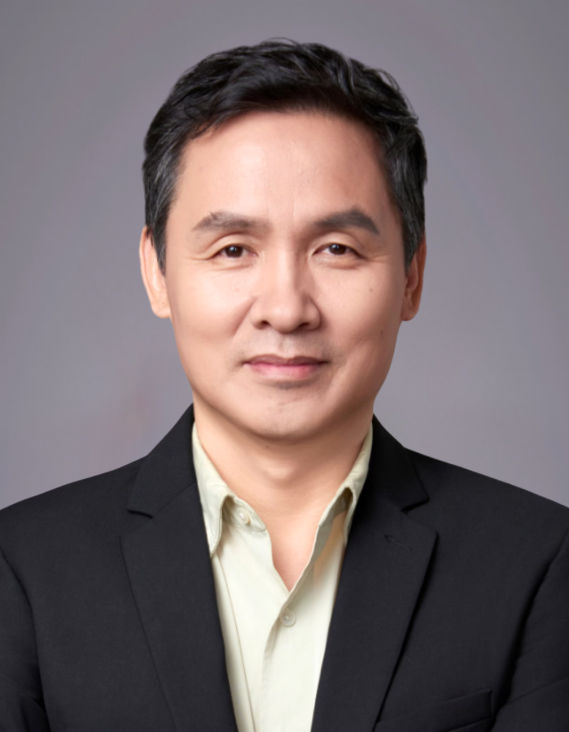
Liping WangDirector of BCBDI
- 职称:
MAE/Principal Investigator
- 联系方式:
lp.wang@siat.ac.cn
- 个人网页:
- 座右铭:
个人简介
Liping Wang received his Ph.D. in medical neuroscience from Charite -Universitatsmedizin Berlin with Prof. Helmut Kettenmann at the Department of Cellular Neurosciences, Max-Delbruck-Center for Molecular Medicine (MDC) in 2005 and did his postdoctoral work at the Department of Bioengineering, Stanford University with Prof. Karl Deisseroth from 2005 to 2008. Then he joined SIAT, working as associate professor, professor and vice director of Biomedical and Health Engineering Institute from 2009 to 2014. Since 2014, He has become the director of BCBDI, SIAT. He is the founder and director of Guangdong Provincial Key Laboratory of Brain Connectome and Behavior, Shenzhen Key Lab of Neuropsychiatric Modulation. He served as the vice president of the Chinese Neuroscience Society, the director of Collaborative Innovation of Science and Technology Committee of Chinese Neuroscience Society, the director of Chinese Society for Cognitive Science, the chairman of Autonomic Nerve Professional Committee of Chinese Association for Physiological Sciences, and the president of Shenzhen Society for Neuroscience.
研究领域
Dr. Liping Wang’s research contributions focus on: 1) Pioneering the dissection of subcortical neural circuit and cellular mechanisms governing innate behaviors such as fear, feeding, and sleep, by integrating advanced animal behavior analysis techniques, optogenetics-based neural modulation tools and non-invasive brain-computer interface technology developed by his team. 2) Elucidating structural and functional interactions between the central nervous system and peripheral systems under physiological and pathological conditions, particularly their relevance to mental disorder comorbidities. These discoveries provide critical structural and functional evidence for the "survival circuitry" in organisms, demonstrating that the brain employs conserved and universal strategies to coordinate emotional behavioral outputs and maintain systemic homeostasis. From an interdisciplinary perspective bridging neurobiology and integrative physiology, his findings offer novel insights into the brain-body interaction in a holistic view. To date, he has published over 140 research papers in journals including Nature (2007), Nature Methods (2006), Nature Reviews Neuroscience (2023), Neuron (2026a, 2026b, 2025, 2024, 2023, 2022, 2019), JCI (2020), and Nature Communications (2021, 2016a, 2016b, 2015a, 2015b, 2014).
代表论著
1. Xiaoyuan J#, Zhibin X# , Qixing Y # , Yan J # , Jintao Wang , Ruoxi Wang, Yuantao Li , Rouxuan Zhou, Wang L*, Zuxin Chen*, Xin-An Liu*.(2025)Unraveling Sexually Dimorphic Offspring Behaviors: Maternal Premating Stress and the Neuro-Microbial-Metabolic Network.Mol Psychiatry.doi: 10.1038/s41380-025-03378-2.
2.Liu X#*, Lai J#, Han C#, Zhong H, Huang K, Liu Y, Zhu X, Wei P, Tan L, Xu F, Wang Liping*. Neural circuit underlying individual differences in visual escape habituation. Neuron 113(2025):2344-2357.e5.
3.Jialin Ye#;Yang Xu;Kang Huang;Xinyu Wang;Liping Wang*;Feng Wang*.Hierarchical behavioral analysis framework as a platform for standardized quantitative identification of behaviors.Cell Reports.(2025)44,115239
4.Tseng Y-T#, Schaefke B#, Wei P#, Wang Liping#*. Defensive responses: behaviour, the brain and the body. Nature Reviews Neuroscience, 24(2023): 655–671.
5.Liu Q#, Yang X#, Luo M#, Su J, Zhong J, Li X, Chan RHM, Wang Liping*. An Iterative Neural Processing Sequence Orchestrates Feeding. Neuron, 111(2023): 1651-1665.e5.
6.Tseng Y-T#, Zhao B#, Chen S#, Ye J, Liu J, Liang L, Ding H, Schaefke B, Yang Q, Wang Lina, Wang F, Wang Liping*. The subthalamic corticotropin-releasing hormone neurons mediate adaptive REM-sleep responses to threat. Neuron 110(2022): 1223-1239.e8.
7.Zhou Z#, Liu X#, Chen S, Zhang Z, Liu Y, Montardy Q, Tang Y, Wei P, Liu N, Li L, Song R, Lai J, He X, Chen C, Bi G, Feng G, Xu F*, Wang Liping*. A VTA GABAergic Neural Circuit Mediates Visually Evoked Innate Defensive Responses. Neuron 103(2019):473-488.e6.
科研\学术成果
Dr. Liping Wang was elected as the member of the Academia Europaea (2026). He received the Special Government Allowances of the State Council (2024), and he was a winner of Guangdong Ding Ying Science and Technology Award (2023), “the most beautiful scientific and technological worker in Guangdong” (2022), the first prize of Guangdong Provincial Science and Technology Award (2018), “Chang Jiang Scholars Distinguished Professor” (2017) and “Ten Thousand Talent Program Leading Scientist” (2016). He was also supported by “National Science Fund for Distinguished Young Scholars” (2014), and “Hundred Talent Program” (2010).